Protecting every heartbeat
» Go to news mainHow two Dalhousie alum are helping transform cardiac rhythm care around the world

Both Dr. Ratika Parkash (MD ’96) and Dr. John Sapp (MD’ 94) are drawn to solving puzzles.
For Dr. Parkash, that fascination began with electrocardiograms and the math behind the heart's electrical system. For Dr. Sapp, it was a desire to understand how things work, first in a Dalhousie research lab and later while training with world leaders in cardiac rhythm medicine.
Today, the two cardiologists and researchers are helping answer some of the most important questions in cardiac electrophysiology, the branch of medicine that studies the heart's electrical system. Their discoveries are influencing how patients are treated not only here in Atlantic Canada, but around the world.
Understanding the heart’s electrical system
Every heartbeat depends on a carefully coordinated electrical signal. Most of us never think about it until something goes wrong. For people living with cardiac rhythm disorders, a split-second disruption can increase the risk of heart failure, stroke, sudden cardiac arrest, and death. Preventing those outcomes is the focus of internationally recognized research being led in Halifax.
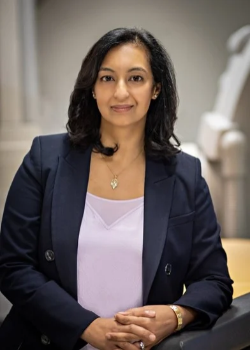 Drs. Parkash and Sapp’s research focuses on different aspects of cardiac rhythm disorders, but both are driven to understand the heart's electrical system and use that knowledge to improve patient care.
"This research can improve patients' quality of life, reduce issues like heart failure, and save lives," says Dr. Parkash.
As professor and clinical researcher in Dalhousie's Division of Cardiology, cardiologist with QEII Health Sciences Centre, and the Heart and Stroke Foundation of Nova Scotia Endowed Chair in Cardiovascular Outcomes Research, Dr. Parkash focuses much of her work on atrial fibrillation, the most common heart rhythm disorder. She is leading studies examining whether more aggressive rhythm-control strategies can prevent heart failure and reduce deaths.
At the same time, Dr. Parkash is helping pioneer new approaches to digital health. Recent national clinical trials examined the use of a digital platform for patients with pacemakers and defibrillators, allowing them to access their health information in an easy-to-understand way and receive high-quality care while reducing travel and healthcare costs. She recently presented her findings at the European Society of Cardiology Congress in Munich, Germany.
Research changing care
While Dr. Parkash focuses on atrial fibrillation and heart failure prevention, Dr. Sapp's work addresses a different but equally life-threatening challenge: ventricular tachycardia (VT), a dangerous heart rhythm and a leading cause of sudden cardiac arrest, that can occur years after damage from a heart attack. VT can cause the heart to beat so rapidly that it can no longer effectively pump blood.
Throughout his career, Dr. Sapp, a practicing cardiologist with Nova Scotia Health, researcher, and assistant dean of clinical research at Dalhousie, has worked to improve treatments for patients at risk of these deadly arrhythmias.
His internationally influential VANISH and VANISH 2 studies have helped shape treatment decisions for patients around the world. The findings demonstrated that catheter ablation, a procedure that targets and eliminates the abnormal electrical pathways causing dangerous rhythms, is often more effective than relying solely on medication therapy.
From Halifax to the world
One of the most rewarding aspects of research is seeing local discoveries create global impact.
"Somewhere in a country I've never visited, a cardiologist I don't know is meeting a patient I've never seen and giving them better treatment because of work that we did here in Halifax," Dr. Sapp says.
Dr. Parkash sees that same global potential in research.
"As a physician, I can make a difference on a daily basis to that patient sitting in front of me," she says. "But as a researcher, I can make a difference to people globally."
A world-class research hub
Despite their differing areas of focus, both researchers emphasize that those advances would not be possible without collaboration.
Today, Halifax is recognized as a leading centre for cardiac rhythm research. Researchers at Dalhousie University and Nova Scotia Health have led international clinical trials and pioneered new approaches to treating dangerous arrhythmias.
"We have advantages here," says Sapp. "We're big enough to practice big-city medicine and do all the procedures you would get in downtown Toronto, but small enough that our cardiovascular group is very collegial."
Dr. Parkash echoes that sentiment, noting the importance of Faculty support, dedicated research infrastructure, and the foundations built by earlier generations of cardiovascular researchers who helped establish Halifax as a hub for innovation in cardiac rhythm care.
Looking ahead, both researchers remain focused on the next unanswered questions.
Whether preventing dangerous arrhythmias, reducing hospitalizations, making care more accessible through technology, or helping patients live longer lives, these cardiac rhythm researchers are ensuring that more people can count on something most of us rarely think about until it goes wrong: every heartbeat.
Recent News
- Walk with a Future Doc brings medical students and community members together to move, connect, and learn from one another
- Canadian study published in NEJM could change care after joint replacement surgery
- How Dalhousie researchers are uncovering the hidden links between metabolism, obesity, and heart disease
- How Dr. Christopher McMaster is helping bridge the gap between scientific discovery and patient care
- Why some children develop persistent Lyme arthritis and how to improve care
- Understanding how nutrition can support cardiovascular health as we age
- Dr. Jennifer Johnston is reimagining reproductive health
- Fostering the next generation