
Meet researcher, Dr. Robin Urquhart
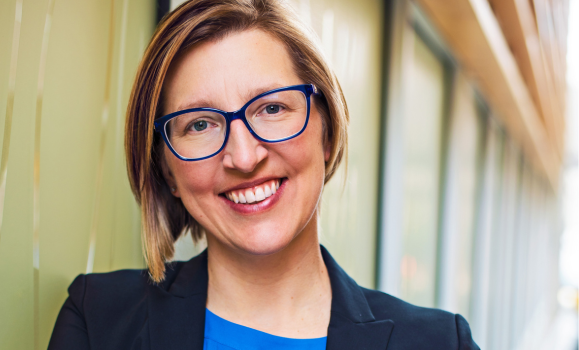
Dr. Robin Urquhart is a nationally recognized leader in cancer research, known for her commitment to improving access, equity, and outcomes for patients across Canada. Her career began at Dalhousie University, where she completed her undergraduate and doctoral studies before joining the Department of Surgery as an assistant professor in 2013. In 2019, she was appointed the Canadian Cancer Society (Nova Scotia Division) Endowed Chair in Population Cancer Research, anchoring her work in the Department of Community Health & Epidemiology (CH&E).
Dr. Urquhart’s research spans clinical, health services, and population health domains, with a focus on issues that matter most to patients, families, and clinicians. She leads large, interdisciplinary initiatives and national collaborations, integrating basic science with applied research to address complex challenges across the cancer continuum. Her approach is shaped by personal experience—growing up in rural Newfoundland, witnessing the impact of limited healthcare access, and enduring profound family losses to cancer. These experiences have fueled her dedication to research that is both scientifically rigorous and deeply relevant to those affected by cancer.
Q: Can you describe the main focus of your research program?
My research is broad and eclectic, crossing clinical research, health services, and population health. I’m interested in access, quality, equity, and outcomes—always looking for ways to improve these areas. My projects range from understanding cancer risk in populations to developing psychosocial interventions for survivors. I also lead national interdisciplinary initiatives that bring together basic science and applied research. While I don’t do “wet lab” research myself, I value the need for diverse perspectives and skillsets to tackle cancer’s complexity.
Q: What inspired your focus on access and equity in cancer care?
Growing up in a small, rural Newfoundland community, I saw firsthand how limited healthcare access affected families. Both my parents died of pancreatic cancer when I was young, and I was my mother’s primary caregiver. We had little medical support, and those experiences shaped my commitment to improving access and reducing disparities in cancer care. My curiosity about cancer started early, reading my mom’s nursing textbooks before the internet existed. It was much later, in my 20s, before I realized this was an area of science I could pursue. When I did, I applied to do my PhD. I knew this was the area on which I wanted to work.
Q: How do you decide which areas of the cancer continuum to prioritize?
I let patient, family, and clinician priorities guide my work. Rather than focusing on prevention, treatment, survivorship, or end-of-life care in isolation, I study what truly matters to those affected by cancer and what has the potential to change care and outcomes. This approach has allowed me to shape my program around real-world needs.
Q: What do you consider your most impactful contributions?
I’m proudest of the trainees I’ve mentored. A few years ago, I was at Oxford University, presenting my research in cancer survivorship. Three of my students – all graduates of CH&E – were with me, presenting their research. One of my international colleagues commented that it was excellent to see a new generation engaged and being trained in cancer survivorship research. I was struck, and filled with pride, by his comment.
Currently, I lead a national team investigating environmental causes of lung cancer, supporting 24 trainees. Building this capacity is incredibly rewarding. I’m also proud of leading the Pan-Canadian Framework for Cancer Survivorship Research, which led to the largest strategic investment in cancer survivorship research in Canada’s history.
Q: How do you involve patients and families in your research?
Patients and families are integral members of my research teams. They help with study design, conduct, data analysis, and dissemination. I consult with patient and family partners when developing research proposals, ensuring their perspectives shape our studies. Clinical colleagues are also involved, and together we develop protocols that reflect lived experience and professional expertise. Research is a team effort, and the lived experience of disease is just as important as scientific knowledge.
Q: How do national collaborations influence your work?
Being part of national networks and advisory committees allows me to connect with colleagues who share my interests and learn from diverse perspectives. The Canadian cancer research community is incredibly collaborative and collegial, and I owe much of my success to these relationships.
Q: Why is interdisciplinary collaboration essential in cancer research?
Cancer is a collection of over 200 diseases, each with unique molecular features. Effective prevention, diagnostics, and therapies depend on integrating molecular biology, genetics, epidemiology, behavioral sciences, and health policy. Disparities persist among ethnic, racial, and socioeconomic groups, and by geography. Tackling cancer requires research that spans “cells to society,” involving all relevant disciplines.
Q: What advice would you give to those working at the intersection of research, policy, and patient care?
Focus on producing world-class research that’s locally relevant—work that matters to the people and communities around you. Build teams with diverse expertise and experiences, including academic disciplines, sectors, and lived experiences. Hone your “soft skills”—communication, collaboration, adaptability. These skills are essential for translating research into policy and care that make a real difference.
Q: What are your hopes for the future of cancer care in Canada?
We’ve made tremendous progress in cancer control, but some communities have benefited much more than others. Disparities in care and outcomes persist. However, many initiatives and organizations are working to address these gaps. Advances in precision oncology are extraordinary, and our ability to treat cancer will change immensely in the coming decades. The challenge is ensuring every Canadian has access to these novel treatments and technologies. It’s a huge task, but more people are working on solutions than ever before, which makes me hopeful for the future.
Q: How do you see initiatives like the Marathon of Hope Cancer Centres Network transforming cancer research and treatment?
The Marathon of Hope Cancer Centres Network is a game-changer for cancer care in Canada. It brings together world-class expertise to create the largest collection of cancer data ever assembled in the country. With new tools like AI and advances in genomic sequencing, we can study these data to find answers that help prevent, detect, diagnose, and treat cancers. This collaborative effort involves more than 1,300 researchers, clinicians, patients, and staff. We’re focused on ensuring that scientific advancements reach all Canadians, regardless of where they live or their circumstances.
Q: Is there something people might not know about your journey or approach to research?
My path to cancer research was anything but straightforward. My undergraduate degree was in Kinesiology, focusing on environmental ergonomics. I trained offshore oil and gas workers to escape from ditched helicopters, earned a Master’s in Exercise Science, became a small arms trainer with the Canadian military, and worked as a freelance journalist in South America before turning to health services research. These varied experiences have shaped my research toolkit and perspective.
Q: Can you share a moment when your research directly influenced health system decisions or patient outcomes?
Years ago, I conducted research in colorectal cancer care, focusing on access and quality issues. I found significant overuse of diagnostic tests in Nova Scotia, which led to one of Choosing Wisely Canada’s Top 10 Recommendations in Oncology Care. My work also informed the development of rectal cancer standards and standardized diagnostic pathways in the province, streamlining referrals and investigations to improve patient outcomes.