
Meet researcher, Dr. Finlay Maguire
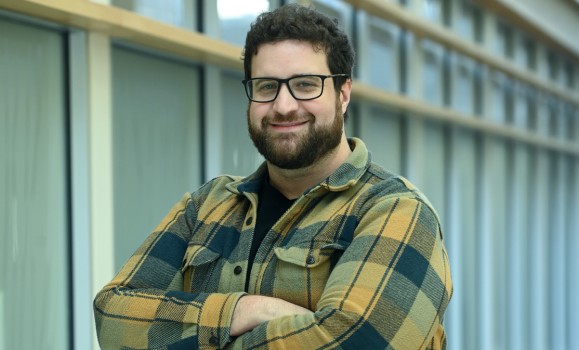
Dr. Finlay Maguire is an internationally recognized early career researcher, jointly appointed as Assistant Professor in Computer Science and Community Health & Epidemiology at Dalhousie University since 2022. He also serves as Pathogenomics Bioinformatics Lead for Toronto's Shared Hospital Laboratory, one of Canada’s largest clinical microbiology labs.
Dr. Maguire’s innovative interdisciplinary research program focuses on developing computational tools for diagnosing, tracking, and preventing emerging infectious diseases using DNA sequencing data. His work bridges computer science, epidemiology, and microbiology, and involves extensive collaborations with clinicians and public health bodies to translate findings into effective public health and clinical decision-making. He trained at the University of Oxford and University College London, held prestigious fellowships at NASA and Dalhousie, and was recently elected to the College of the Royal Society of Canada. Dr. Maguire’s research has had considerable real-world impact, including contributions to national and international responses to COVID-19, antimicrobial resistance, and other health emergencies.
Q: What inspired you to pursue a career at the intersection of data science, public health, and infectious disease research?
I've always loved the complexity and puzzle that is microbial evolution. Microbes,despite their simplicity, possess an extraordinary ability to adapt and modify their environment. This complexity drew me into the world of 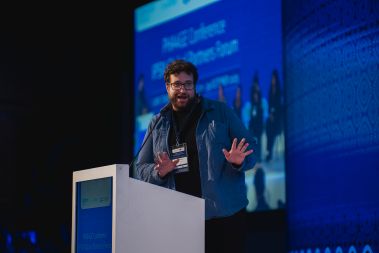 computational biology, where analyzing vast, intricate datasets became both a challenge and a passion. After completing a basic science-focused PhD, I sought ways to apply my computational skills to real-world problems, particularly those impacting human and animal health. This led me to a position with Dr. Robert Beiko and the Public Health Agency of Canada working on new genomic methods for tracking antimicrobial resistance.https://www.canada.ca/en/public-health.html. I was then lucky enough to receive a the Donald Hill Family Fellowship which was instrumental in my career by providing me with the time and resources to develop my research program and contribute to the national COVID-19 response prior to becoming faculty. My career has been shaped by a desire to bridge the gap between theoretical science and practical health outcomes, ensuring that research has a tangible impact on society.
Q: How does your joint appointment across Computer Science and Community Health & Epidemiology shape your research and teaching?
Holding a joint appointment allows me to operate at the crossroads of two dynamic fields. In Computer Science, I focus on developing analytical tools capable of making sense of large, noisy datasets—such as those generated by DNA sequencing. In Community Health & Epidemiology, I apply these computational methods to track, understand, and prevent infectious diseases in clinical and public health settings. This interdisciplinary approach is reflected in my teaching as well. I instruct scientists in programming and bioinformatics algorithms, guide epidemiology and computer science students in health data research, and help medical students navigate the ethical complexities of public health and infectious disease management. The synergy between these disciplines not only enriches my research but also ensures that students are equipped with the skills needed to tackle modern health challenges.
Q: What are the main goals of your lab, and how do they align with your broader mission to mitigate health and social crises?
The central mission of my lab is to reduce the global burden of infectious diseases, with a particular focus on antimicrobial resistance and emerging zoonoses like SARS-CoV-2 and Highly Pathogenic Avian Influenza. We strive to develop innovative ways to leverage DNA sequencing data for both individual patient care and large-scale public health surveillance. Our research aims to inform clinical decision-making, enhance outbreak response, and support global pathogen monitoring. By integrating computational tools with epidemiological insights, we hope to provide actionable solutions that address both immediate health threats and long-term societal challenges. Ultimately, our work is driven by a commitment to improving health outcomes and building resilience against future crises.
Q: Can you share a moment when your work directly influenced a public health decision or policy?
One of the most impactful moments in my career was the co-discovery and characterization of the first case of SARS-CoV-2 spilling over into wildlife, evolving, and subsequently re-infecting humans. This finding fundamentally shifted our understanding of the virus’s ecology and evolution, prompting a joint statement from the World Health Organization, Food and Agriculture Organization, and the World Organisation for Animal Health. The research received widespread media coverage, reaching millions globally and informing international surveillance strategies. Beyond this, I have contributed to the development of metadata standards for pathogen genome sequencing, which have been adopted by major global databases and public health agencies. These standards facilitate more effective data sharing and outbreak response, underscoring the real-world impact of our research.
Q: How do you approach the challenge of translating complex genomic data into actionable public health insights, and how do you build interdisciplinary collaborations?
Translating genomic analyses into practical public health action requires more than technical expertise; it demands collaboration and clear communication. I work closely with clinicians and public health practitioners to understand their needs and demonstrate how genomic data can address specific challenges. Building interdisciplinary collaborations is equally vital. Whether partnering with refugee clinics or sociologists studying online radicalization, I prioritize trust, openness, and mutual respect. Effective collaboration means bridging disciplinary and cultural divides, ensuring that diverse perspectives contribute to meaningful solutions. My involvement in international consortia, such as the Public Health Alliance for Genomic Epidemiology, has reinforced the importance of teamwork in advancing public health goals.
Q: What advice would you give to students interested in combining computational methods with public health research?
My advice to students is to talk to as many people as you can and stay curious about why things are organized the way they are, especially if it seems inefficient from your perspective. Remember, you’re engaging with complex systems that have numerous constraints and challenges, many of which you may not be aware of when coming from your own niche.
Q: What are your hopes for the future of genomic epidemiology and health data science?
While I am concerned about the current climate of budget cuts and growing inequality, I remain optimistic about the technical advancements in genomic epidemiology. The ongoing development of analytical methods will continue to enhance our ability to track and predict pathogen dynamics. My hope is that pathogen genomics will become a standardized part of clinical microbiology and public health, enabling more equitable and effective responses to infectious disease threats. Achieving this vision will require breaking down financial and political barriers to data sharing and building capacity where it is most needed.