
Meet visting scholar, Dr. Fuqing Mu
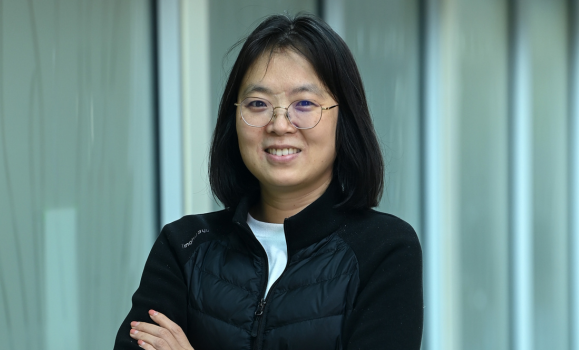
We are delighted to welcome Dr. Fuqing Mu, lecturer at the School of Mental Health, Jining Medical University, as a visiting scholar in the Department of Community Health and Epidemiology. Dr. Mu brings extensive expertise in mental health research, particularly in the epidemiology of mental disorders among Chinese university students. As an active member of Dr. JianLi Wang’s research team, Dr. Mu has played a pivotal role in a longitudinal study on student mental health, overseeing training for data collection and supporting data analysis and publication efforts.
Dr. Mu’s academic journey has been shaped by a commitment to bridging the gap between high mental health needs and limited services in China. Inspired by personal experiences and the challenges faced by her peers, Dr. Mu has focused on preventive, population-level approaches and data-driven models to predict depression trajectories. During her tenure at CH&E, which extends until Oct. 30, 2026, she will concentrate on advanced data analysis, lead publications, and coordinate a new collaborative project aimed at universal prevention of mental health problems and suicide in Chinese schools.
Dr. Mu’s work is distinguished by its cross-cultural perspective, innovative use of predictive modeling, and dedication to developing scalable interventions that address the unique challenges faced by youth in China and beyond. Her collaboration with Canadian researchers, particularly at Dalhousie, reflects her vision for international partnership and capacity building in mental health research.
Q: What inspired you to specialize in mental health research?
I trained in mental health in China and was struck early on by the gap between high mental health needs and limited services. Witnessing burnout among peers inspired me to focus on preventive, population-level approaches. Dr. Wang’s longitudinal project showed me how data-driven models could predict depression trajectories, something I wanted to bring into Chinese university settings.
Q: What drew you to study mental health among university students, and what key findings have emerged from your longitudinal work?
University students face unique developmental challenges like academic pressure, major life transitions, identity formation, and increasing independence. These stressors create vulnerability for anxiety, depression, and suicidal ideation. Our research found that stress and symptoms fluctuate with academic cycles, help-seeking intentions remain low, predictive models can identify high-risk subgroups, and cultural stigma is a persistent barrier. These insights highlight the urgent need for tailored prevention frameworks.
Q: How do cultural and systemic factors influence mental health research in China compared to other contexts?
China’s rapid social changes, achievement-oriented education, and cultural values around emotional restraint shape both research and service delivery. Stigma is a major barrier, and help-seeking often occurs late. Resources are unevenly distributed, and early prevention in schools is emerging. Compared to Western contexts, Chinese researchers face challenges in data access and early intervention, but growing national emphasis on mental health is creating new opportunities for innovation.
Q: Can you tell us about your current research focus at CH&E and the new collaborative project on universal prevention in Chinese schools?
At CH&E, I’m applying advanced statistical methods to longitudinal student datasets, aiming to identify risk trajectories, evaluate predictors, and develop early-warning models for university-level prevention programs. The new project seeks to design and test a universal, school-based prevention model for middle and high schools in China, integrating mental health literacy, life-skills education, early detection, gatekeeper training, and referral systems. Our goal is a scalable, evidence-based intervention for nationwide adoption.
Q: What strategies do you believe are most effective for fostering international research collaborations, and what are your long-term goals?
Effective collaboration relies on shared goals, complementary expertise, transparent communication, and mutual capacity building, such as joint workshops and student exchanges. My long-term goal is to develop culturally informed prevention strategies for youth mental health, integrating epidemiology, education, and data science. This visiting scholar experience provides advanced training and an international perspective, strengthening my ability to lead collaborative research in the future.
Q: How do you envision your work influencing mental health policy and practice in China and globally?
I hope my work will support early-warning systems for schools and universities, inform evidence-based policies for adolescent depression and suicide prevention, strengthen mental health literacy, reduce stigma, and promote data-driven, cross-cultural approaches to prevention. Ultimately, I aim for research that translates directly into practice, helping institutions identify risk early and create healthier environments for young people worldwide.