
Meet researcher, Dr. Pantelis Andreou
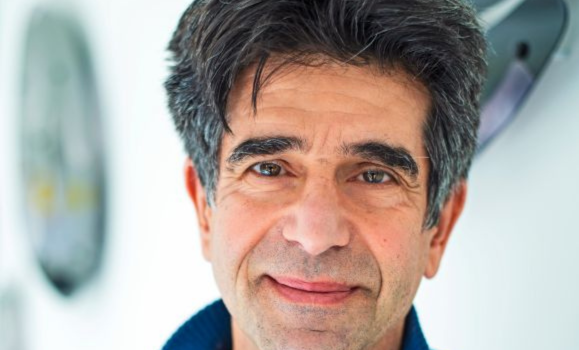
Dr. Pantelis Andreou is a senior lecturer whose career bridges the worlds of biostatistics, clinical trials, and health research. With a rich academic foundation—holding a PhD and MSc in statistics, an MSc in economics from The University of Western Ontario, and a BSc in mathematical economics from the University of Toronto—Dr. Andreou brings a unique interdisciplinary perspective to the study and teaching of statistical methods in health care. His research focuses on clinical trials, statistical modeling, and the statistical analysis of health surveys, contributing to the advancement of patient care and the reliability of health research findings.
Q: What drew you to biostatistics and clinical trials?
My interest in statistical modeling and applying mathematics to health data led me to this field.
Q: What inspired your career in statistics and health research?
The theory and application of probability theory have always fascinated me.
Q: How did your academic journey—from economics to biostatistics—shape your perspective on health care research?
In biostatistics, theory is developed to explain and model real-life processes, whereas in economics, theory is developed to impose on economies. This shift has shaped how I approach healthcare research.
Q: Why are clinical trials important for improving patient care?
Clinical trials are a sound method to prove the effectiveness and efficacy of a health-related hypothesis.
Q: How does your work help ensure research findings are accurate and reliable?
Adequate sampling and proper statistical procedures based on probability methods warrant accurate and reliable results.
Q: What do you enjoy most about teaching graduate courses in biostatistics and clinical trial methods?
Teaching demands thorough knowledge of the subject and requires ingenuity to focus on the concepts.
Q: What advice would you give to students interested in biostatistics or health research?
Visualize the data. Models change and advance to summarize what the data is hiding.
Q: What changes would you like to see in clinical trial design and conduct?
Unfortunately, mostly positive results are published; results of all trials should be recorded.
Q: How do you see data and statistical methods shaping the future of health care?
Nova Scotia's One Person One Record (OPOR) initiative is a big step forward for advancing new statistical methods in health care.
Q: What’s something people might be surprised to learn about your work or journey?
A statistician never stops thinking of models—even in their sleep.
Q: Can you share a moment when your research or teaching made a real difference for students or health professionals?
Having Thanksgiving at my place with 13 foreign students and my family was a memorable experience.
Q: What role does collaboration play in your work on clinical trials?
Clinical trials are like music; you need health care providers, family, patients, mathematicians—just as you need a composer, musical instruments, performers, and an audience to create music.