
Meet researcher, Dr. Jeannie Shoveller
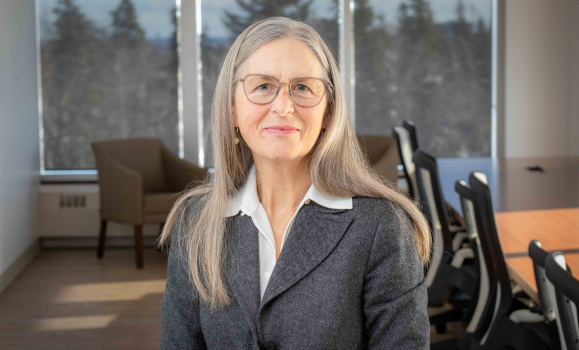
Dr. Jeannie Shoveller is a professor in the Department of Community Health & Epidemiology and Vice-President Research at Nova Scotia Health. An internationally recognized public health scholar and research leader, Dr. Shoveller’s work focuses on addressing social health inequities and strengthening health systems so they better reflect people’s lived experiences. Over a career spanning more than two decades, she has led major initiatives in health systems research, HIV care, substance use, child and youth health, and gender and sexual health—working closely with governments, healthcare organizations, and communities in Canada and abroad. Since returning to the East Coast in 2020, she has played a key role in advancing research that is integrated with care delivery.
In her provincial leadership role, she leads a team that connects patients, clinicians, researchers, and partners to advance knowledge that improves health outcomes across Nova Scotia, ensuring research is deeply integrated with care delivery. At Dalhousie, she contributes to the Faculty of Medicine’s teaching, mentorship, and governance through her participation in research grants, graduate student supervision, and service on key committees, including the Health Sciences Research Ethics Board.
Q: Can you tell us about your research focus?
My research focuses on understanding and addressing social health inequities, with particular attention to how health systems can be designed to respond more effectively to people’s real-world experiences. Ultimately, my goal is to generate evidence that strengthens care delivery and advances health equity.
Q: What does it mean to study the social contexts of health, and why does this matter for health systems?
Studying the social contexts of health means looking beyond biology or clinical care to understand the everyday realities that influence health outcomes. Where people live, whether they feel safe, their access to income, education, and social supports, and how systems treat them all matter. If we don’t account for these factors, we risk designing services that work well for some people but leave others behind. Building equity into health systems has to be intentional.
Q: What drew you to a career in public health and health systems research?
I grew up in a family where equity and public service were regular topics of conversation. My parents also emphasized the importance of asking informed questions and contributing to society. Pursuing a career in public health and health systems research felt like a natural extension of those values.
Q: How have your experiences working in British Columbia and Nova Scotia shaped your approach to health equity?
Working in different provinces has reinforced how deeply local context matters. In British Columbia, I saw firsthand the impacts of urbanization, substance use, and HIV on communities. In Nova Scotia, I’ve gained a deeper appreciation for rural health, access challenges, and the importance of strong community relationships. Across both settings, the lesson is consistent: equity doesn’t happen by accident—it has to be built into systems.
Q: You’ve led major initiatives in areas such as HIV care, substance use, and child health. What impact have these efforts had?
Across these areas, the common thread has been improving access to care, reducing stigma, and strengthening connections between health services and the people they serve. Whether it’s expanding HIV supports, advancing harm reduction approaches, or improving child health programs, the aim has always been to create more responsive and compassionate systems grounded in lived experience.
Q: Collaboration is a recurring theme in your work. Why is it so critical in public health research?
No single organization or discipline can solve complex health challenges alone. Collaboration allows us to bring together lived experience, clinical expertise, policy insight, and research evidence. When we work across sectors and disciplines, we can move ideas into action more effectively and with greater impact.
Q: What do you value most about mentoring students and early-career researchers?
Working alongside students and early-career colleagues is the best part of this work. I’ve had the privilege of mentoring more than 80 graduate students and postdoctoral fellows from around the world, and I remain convinced of the tremendous value they bring to health systems and society. They are so smart, tremendously dedicated and motivated to search for solutions, and they exude positive energy, which is precisely what the world needs more of.
Q: What advice would you offer to those who want to make a difference in public health?
Stay curious, listen deeply, and don’t underestimate the value of relationships. Meaningful change takes time, persistence, and collaboration. Find mentors, learn from communities, and remember that even incremental progress can lead to lasting impact.
Q: Looking back, are there moments in your career that stand out as especially meaningful?
In public health and health systems research, there are rarely single “eureka moments.” Progress comes from sustained focus, patience, and tenacity. That said, I’m particularly proud of work that helped shape legal frameworks and service provision related to substance use, violence prevention, and harm reduction in Canada and internationally. I’m also proud to serve at Nova Scotia Health, where research is deeply integrated with care—bringing innovative treatments and approaches directly to Nova Scotians. Being part of a team committed to delivering the best possible care is a highlight of my career.