
Meet researcher, Dr. Swarna Weerasinghe
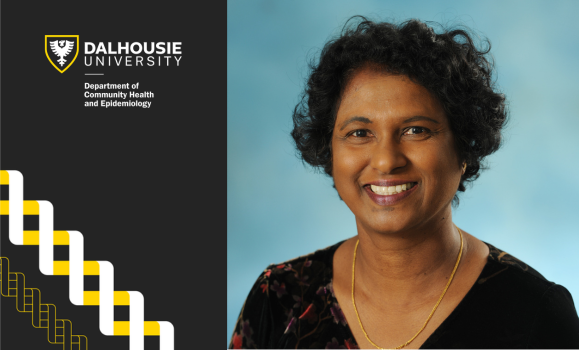 Driven by a belief that numbers tell their most powerful stories when grounded in human experience, Dr. Swarna Weerasinghe is a biostatistician and epidemiologist whose work sits at the intersection of data science, global health, and health equity. An associate professor with the Department of Community Health and Epidemiology, Dr. Weerasinghe specializes in applying statistical learning and machine learning methods to complex health data—particularly data reflecting the lives and health outcomes of marginalized and hard‑to‑reach populations.
Her research focuses on improving access to healthcare for vulnerable groups, including immigrants, people experiencing homelessness, drug users, and female sex workers, both in Canada and globally. By combining traditional epidemiological approaches with innovative methods such as text analytics, big data frameworks, and digital health tools, Dr. Weerasinghe works to uncover patterns that are often missed in conventional analyses.
Originally from Sri Lanka, Dr. Weerasinghe earned her PhD at Dalhousie University after completing undergraduate and master’s degrees at the University of Colombo. She currently collaborates with clinicians, computer scientists, and global public health researchers through partnerships such as Global Health Promise and the Maritime SPOR Support Unit. Alongside her research, she is deeply committed to teaching and mentorship, helping train the next generation of scholars to use data ethically and creatively to advance health equity.
Q: Can you tell us about your current role and research focus?
My role in the Department of Community Health and Epidemiology is partly to expand traditional statistical methods by incorporating innovative machine learning and text based analytical techniques, while also training the next generation of scholars in these challenging areas. Numbers make more sense when they are contextualized with the information behind them. I’m always interested in applying innovative methods to uncover hidden patterns in health data, particularly data that comes from hard‑to‑reach vulnerable populations.
My work doesn’t fit neatly into the traditional role of a biostatistician. I tend to embrace data complexity rather than move away from it, using existing methods or developing new ones when needed, to better understand real-world health issues.
Q: Much of your research focuses on vulnerable populations. Why is this work so important to you?
I became interested in the health of vulnerable population in 2004, when I lead the Atlantic Metropolis Health Domain, a health node of the Atlantic Center of Excellent in Immigrant and Refugees, a federal government initiative. There were five other centers of excellence across Canada. I was exposed to stories of the health journey and the struggle of survival of immigrants and refugees. Marginalized populations are more vulnerable to poor health outcomes and premature mortality than others. For groups such as immigrants, refugees, trafficked women, and people experiencing homelessness, factors like language barriers, culture, gender, housing insecurity, and income instability deeply shape health outcomes.
Understanding and uncovering inequities in access to healthcare is critical if we want health services to be truly inclusive. Only then can we say that our health system is equally accessible to all.
Q: How does big data and digital health research support this work?
Big data allows us to examine health issues in ways that traditional surveys often can’t. Through my work with Global Health Promise, we collected extensive datasets—including surveys with more than 150 questions and narrative accounts—focused on food insecurity, maternal and mental health outcomes, and the needs of female sex workers and their children in low‑ and middle‑income countries.
The volume and diversity of these data make it possible to uncover patterns that inform real-world implementation. Some of this work has already moved into pilot maternal health programs for female sex workers. I’ve also worked on digital health applications, such as sentiment analysis of Twitter data during COVID‑19 lockdowns, contributing to policy forums and government consultations.
Q: How do machine learning and statistical learning methods improve our understanding of health trends?
Machine learning can uncover naturally occurring trends and patterns in massive datasets that traditional methods might miss. When models are properly trained, they offer powerful insights from nontraditional data sources such as social media, online search trends, and health blogs.
These data often reflect the natural flow of human behavior, rather than responses to predefined survey questions, which can enhance predictive power. Tools like boosting and model accuracy testing also help improve precision in our findings.
Q: You collaborate with researchers across many disciplines. Why are these collaborations so valuable?
Health is a complex web of interactions, and health research must reflect that complexity. I often act as a bridge between tool developers, such as computer scientists and healthcare decisionmakers, helping translate methodological advances into practical knowledge.
Working with clinicians and global health teams allows me to learn from real-world challenges on the ground and share expertise across borders. I bring this experience back into the classroom, where it helps prepare students to think critically and collaboratively.
Q: How do you ensure your research leads to real-world change?
Knowledge translation is central to my work. My research with emergency department teams on wait time disparities and visit trends among homeless, urban, and rural populations has led to concrete policy and program recommendations.
Beyond publications, I work closely with community organizations and advisory boards, including immigrant and refugee women’s groups, and have contributed to diversity initiatives within health organizations. I’ve also been commissioned to prepare knowledge synthesis reports for government agencies. These pathways help ensure research findings inform practice, policy, and care delivery.
Q: What have you learned from studying emergency department trends?
We are seeing an increasing trend in seniors using emergency departments for high acuity conditions in Halifax, which has important implications as the population ages. There are also notable differences between urban and rural emergency department use.
For people experiencing homelessness, wait time disparities are most pronounced in low acuity, non‑urgent visits, reinforcing the idea that limited access to primary care drives emergency department use. Addressing those non‑urgent needs elsewhere could ease pressure on emergency departments overall.
Q: What do you enjoy most about teaching and mentoring students?
I especially enjoy mentoring students who struggle initially but are deeply motivated to succeed. Biostatistics can be challenging for students without a strong math background, and creating a welcoming, supportive environment makes a real difference.
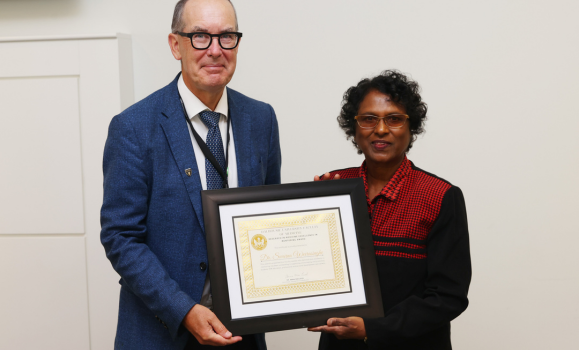
I find that once you understand a student’s strengths and challenges, you can help them grow with confidence. Being recognized by students for supervision/mentorship has been one of the most rewarding aspects of my career.
Q: What advice would you give to students or researchers who want to use data to improve healthcare?
Collect a broad spectrum of data rather than reducing everything to numbers alone. Pay attention to those at the extremes, not just the average. And always include the human stories behind the data—otherwise, the results lose meaning. Health data should reflect lived experience if we want it to be useful.
Q: How do you see technology shaping the future of public health?
Digitizing health systems—for example, moving toward integrated records—will significantly improve public health surveillance and coordination. It’s time for health systems to move away from fragmented and handwritten processes so we can use data more effectively and responsibly.