Is the Summer Institute Right for me
Is the Summer Institute in Applied Bioethics Right for Me?
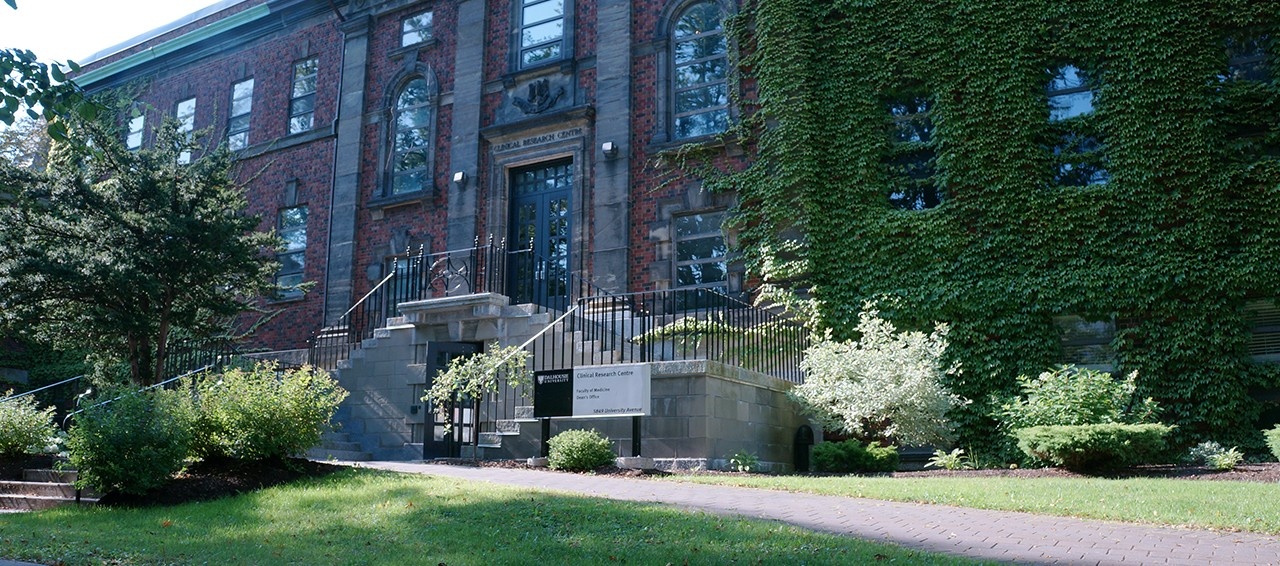
The Summer Institute is a unique opportunity to learn with a multidisciplinary faculty and with a diverse cohort, based in-person on the Dalhousie campus in Halifax, Nova Scotia. The overarching goal of the Summer Institute is to enrich life-long learning by creating a community in bioethics.
You will be taking part in participatory sessions covering a core bioethics curriculum and individual bioethics and clinical ethics topics. The cohort will include participants from backgrounds, from students in bioethics and other humanities, members of research and hospital committees, and medical professionals.
The intensive week is Monday to Friday, 9-5; one additional hour for mentorship; and 3 hours on Saturday.
The SI is based on the inherent transdisciplinary environment in bioethics, which can be used to navigate complex, uncertain, and pressing societal issues. The Department of Bioethics is focussed on creating societal transformations that cannot be tackled by a single academic discipline or group of professionals; as such, certain academic models can duplicate this in ways that support learning. The fact that a broadly philosophy facing Department of Bioethics is grounded in a medical school, is recognition of the importance of bioethics in preparing students for the problems and opportunities they will face in health care. The diverse makeup of participants taking on this challenge (like the broad make up of a medical school and health system students will work in), makes this kind of learning central to what we are trying to accomplish with the SI. Bioethics practice intentionally brings together clinical disciplines, philosophy, social sciences, law, policy, research, and community perspectives – which is reflected in our experienced faculty.
The SI is therefore for learners, who, in practice and studies, or their community, encounter ethically complex situations and would value sustained grounding in normative reasoning and structured opportunities in bioethics.
Structure
The success of the SI is premised on the collaborative nature of the intentionally diverse makeup of the prospective class. We therefore use a novel educational model to accommodate a somewhat different kind of interdisciplinary learning than is achievable within a credit certificate, non-credit professional framework, microcredential, or adult learning course.
For these reasons, bringing together learners from different backgrounds is not simply an admissions strategy; it is an important component of the curriculum itself, that thereby balances enrichment and academic rigor in a societally engaged programme, and contributes to an educational mandate to address ‘societal and sustainability challenges.’
1. Application: students will complete an application using a case study, reflecting their interest and ability in bioethics. Once accepted, students will be provided with a reading list that clearly outlines the goals/topics of the SI.
2. Collaborative week: students will co-create the education experience.
3. Assessment: students will reflect on their development, achievements, and future opportunities in bioethics. The assessment is based on developing the Individual Student’s Learning Objectives of Ethical Reasoning, Critical Thinking, Bioethical Application, and Engagement.
By including these three elements we have gained approval for offering a non-credit professional certificate. And, the SI has been
Educationally approved by Dalhousie University Continuing Professional Development and Medical Education.
Hours
Together, these add up to around 70 hours of commitment towards the awarding of a non-credit professional certificate. This includes:
- Reasonable time spent preparing the application
- Homework, such core and elective readings in preparation of the in-person week
- In-person hours during the intensive week (9-5 Monday-Friday, plus 1hr and 3 hours on Saturday)
- Reasonable time spent completing the assessment
Health care professionals may be eligible for CPDME credits
For 2027: This activity meets the certification criteria of the College of Family Physicians of Canada and has been certified by Dalhousie University Continuing Professional Development and Medical Education for up to 30.0 Mainpro+® Certified Activity credits.
This activity is an Accredited Group Learning Activity (Section 1) as defined by the Maintenance of Certification Program of the Royal College of Physicians and Surgeons of Canada, and approved by Dalhousie University Continuing Professional Development and Medical Education. You may claim a maximum of 30.0 hours (credits are automatically calculated).
In 2027, pending approval for 2027, there may be credits for an additional 2.5 hours credited to the Dr. Fred Barton Visiting Scholar & Lecture in Ethics in Medicine.
Outcomes
Completing the programme satisfactorily, which includes the successful application, attendance during the week, and completion of a pass/fail assessment, will result in the award of a non-credit professional certificate, and (where registered as a health care professional) CPDME credit certificate.
Artificial Intelligence
The ethical use of AI for the SI emphasises the need for personal, human-centric, transparent, and equitable learning, primarily aiming to ensure that AI technologies enhance learning without perpetuating biases or errors. Fully transparent disclosure of AI use is always required.
Inspired by the recent Journal of the American Medical Association guidelines, we strongly discourage the use of [generative] AI in drafting cases because they are so inherently personal that preserving authenticity is paramount.
Personal responsibility: cases submitted for the application and the assessment reflection should not use AI. The process of generating the case is an opportunity for the student to initiate engagement with their focused topic for the week and will prime the student for optimal learning and progress during their time in the Summer Institute. Uses of AI such as grammar or formatting are acceptable if disclosed. However, even such uses of AI could lead to distancing the student from a full engagement in their topic and will be discouraged.
Learning: readings should be read.
“According to Dalhousie and Nova Scotia privacy laws, instructors are not permitted to require students to use generative AI other than Microsoft 365 Copilot Chat, which is a free AI-powered tool included with all Dalhousie accounts. If generative AI is used in cases where it is not permitted, it will be considered an academic integrity offence, and you will be subject to appropriate disciplinary and/or corrective measures.”
For more on the ethical use of AI in academic research, see: Kaebnick, G., et al. 2023. Editors’ Statement on the Responsible Use of Generative AI Technologies in Scholarly Journal Publishing. Hastings Center Report 53: 3–6. https://pubmed.ncbi.nlm.nih.gov/37777997/
Academic Principles
You will be expected to attend all sessions timetabled for the week, and the award of non-credit professional certificate, and (if registered) Mainpro+® Certified Activity credits/ Certification Program of the Royal College of Physicians and Surgeons of Canada credits.
Acknowledgements
Dalhousie University operates in the unceded territories of the Mi’kmaw, Wolastoqey, and Peskotomuhkati Peoples. These sovereign nations hold inherent rights as the original peoples of these lands, and we each carry collective obligations under the Peace and Friendship Treaties. Section 35 of the Constitution Act, 1982 recognizes and affirms Aboriginal and Treaty rights in Canada.
We recognize that African Nova Scotians are a distinct people whose histories, legacies, and contributions have enriched that part of Mi'kma'ki known as Nova Scotia for over 400 years.
Accessibility
You will be expected to attend all the timetabled sessions in person.
At various times, you will need access to a computer with a reliable internet connection and Microsoft Office for Windows/Mac.
There are no other costs other than the registration fee, and other meals outside of the programme are not included. No residency or accommodation is offered.
Reading resources and other necessary learning resources will be provided by the Summer Institute.
Refer to the Dalhousie Student Accommodation Policy for information on how instructors and staff work collaboratively with students to create and sustain an accessible educational environment.
Academic Integrity: Dalhousie expects all students to be responsible learners, demonstrating the values of intellectual honesty, trust, fairness, and respect in your work. Key aspects of academic integrity include, but are not limited to: avoiding plagiarism, not engaging in cheating, submitting original work, and acknowledging sources of information and ideas when they are not your own. Refer to the Statement on Intellectual Honesty for definitions of various academic offences.