
Meet postdoctoral fellow, Dr. Julia Yates
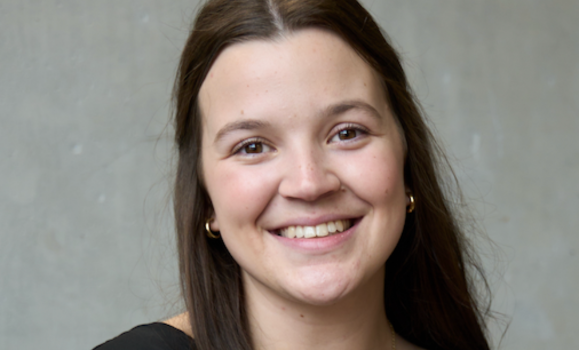
Dr. Julia Yates is a Killam Postdoctoral Fellow in the Department of Community Health and Epidemiology, where she works with Dr. Alexa Yakubovich. Her research focuses on the health, development and adaptive capacities of children, families and other equity-denied populations, particularly those affected by gender-based violence.
Dr. Yates completed an Honours Specialization in Health Sciences, a Master of Science in Health and Rehabilitation Sciences, and a PhD in Health and Rehabilitation Sciences at Western University. Her graduate research explored the resilience and protective factors of children and mothers exposed to parental gender-based violence, deepening her interest in evidence-informed interventions and health systems research.
Now, through her postdoctoral research, she is applying implementation science to examine how health systems can integrate screening and response protocols for gender-based violence into routine care. Her goal is to generate practical evidence that supports more equitable, coordinated and trauma-informed systems of healthcare in the Maritimes and beyond.
What led you to pursue research in community health and epidemiology, and how has your education shaped your approach?
During my studies at Western University, I conducted rigorous mixed-methods research exploring the resilience and protective factors of children and mothers exposed to parental gender-based violence. Through these pursuits, my passion for evidence-informed interventions and health systems research aimed at supporting these populations grew. This makes the Department of Community Health and Epidemiology, and specifically the work being done by Dr. Yakubovich, a perfect place to pursue this passion.
My educational background has fundamentally shaped the way I approach research by emphasizing the importance of translating evidence into meaningful action. I have learned that research should not simply generate knowledge, but should also inform practice, policy and real-world decision-making. As a result, I am always guided by the question, “So what?” when designing studies, interpreting findings, and disseminating results.
I am particularly interested in ensuring research findings are accessible and useful to the people and systems they are intended to serve. This means engaging with knowledge users and individuals with lived experience and considering how findings can be translated into tangible improvements in health services, policies and outcomes.
What are your primary research interests?
My research focuses on understanding the factors that shape the health, development, and adaptive capacities of children, families, and other equity-denied populations, with a particular focus on those affected by gender-based violence.
Grounded in an intersectional and equity-oriented framework, my work explores how social, structural, and institutional factors shape health and well-being and contribute to inequities across contexts and over time. Through collaborative partnerships with communities and service organizations, I aim to generate evidence that informs the design, implementation and evaluation of interventions across health care, education and social services.
By applying an implementation science approach, my postdoctoral work aims to generate actionable evidence on how health systems can integrate screening and response protocols into routine care, addressing gaps in referral pathways, monitoring and evaluation, and provider training.
Can you share an example of research that responded to a community-identified need?
One example is my work with rural women’s shelters to develop program evaluation tools for women and children affected by gender-based violence.
This project emerged from a need identified by shelter leaders and frontline staff, who recognized that existing evaluation frameworks often failed to capture the unique realities and outcomes of services delivered in rural communities. At the same time, shelters faced increasing pressure from funders and policymakers to demonstrate program impact despite having limited resources and evaluation capacity.
Working closely with the shelters, we co-developed evaluation tools that were both evidence-informed and practical for everyday use. The tools enabled organizations to gather meaningful data on program outcomes, strengthen service delivery, and communicate their impact to stakeholders and funders.
Which publications best represent your contributions to the field?
Two publications best represent my contributions to the field of gender-based violence.
The first, “Resilience profiles of children previously exposed to parental gender-based violence: A longitudinal decision tree analysis,” demonstrates my commitment to advancing strengths-based approaches to children’s recovery following exposure to parental violence. The paper identified distinct resilience profiles over time and highlighted the diverse pathways through which children experience positive adaptation. It has implications for how supports and interventions can be tailored to children’s unique strengths and needs.
The second, “The development of program evaluation tools for women and children at rural women’s shelters,” reflects my commitment to community-engaged and practice-oriented research. Developed in partnership with rural women’s shelters, the project created tools that enabled shelters to systematically evaluate and demonstrate the impact of their programs.
Together, these publications have helped establish a research program centred on understanding and supporting children and families affected by violence.
What have the awards you have received meant to you?
During my master’s and doctoral training, I was honoured to receive a Social Sciences and Humanities Research Council (SSHRC) Canada Graduate Scholarship, as well as several awards that supported the dissemination and translation of my research.
These recognitions are particularly meaningful to me because they reflect the potential for my research to have an impact beyond academia. Building on this foundation, I was recently awarded a Killam Postdoctoral Fellowship, which represents an important next step in my research career and provides an opportunity to continue learning and expanding my program of research.
How has mentorship shaped you as a researcher?
Mentorship from my PhD supervisor, Dr. Tara Mantler at Western University, and my postdoctoral supervisor, Dr. Alexa Yakubovich at Dalhousie University, has fundamentally shaped the researcher I am and continue to become.
They continue to teach me to think critically, pursue innovative research questions, and prioritize research that creates meaningful change in policy and practice. Just as importantly, they model the kind of collaborative, supportive and impact-oriented scholar I aspire to be, influencing not only how I conduct research but also how I mentor and support others.
How do you hope your work will influence public health policy and practice?
My work aims to strengthen how health systems respond to gender-based violence by generating practical evidence that can be integrated into routine care.
By working closely with healthcare and community partners, I hope to inform policies and practices that improve access to support, reduce health inequities, and create more coordinated, trauma-informed systems of health care in the Maritimes and beyond.