
Meet researcher, Dr. Leslie Anne Campbell
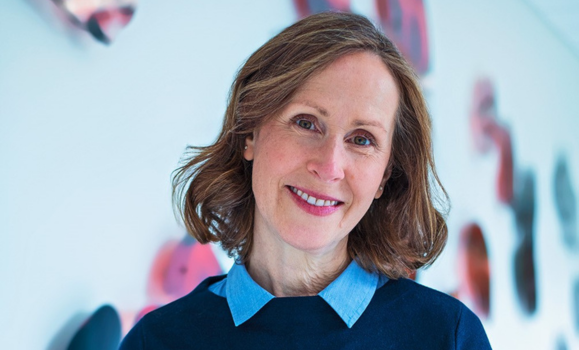
Dr. Leslie Anne Campbell is an Associate Professor in the Department of Community Health & Epidemiology at Dalhousie University whose work sits at the intersection of clinical practice, population health, and health system decision making. With a foundation in mental health nursing and advanced training in epidemiology and health services research, her work is shaped by a longstanding curiosity about why health outcomes vary across individuals and populations—and how health systems can be designed to respond more equitably and effectively.
Drawing on diverse quantitative and qualitative methods, Dr. Campbell’s research focuses on informing decision making in complex, resource‑constrained settings. Her interests span health services research, health technology assessment, mental health, patient‑centred outcomes, population screening, simulation modelling, and the use of administrative health data. She is particularly committed to supporting evidence‑informed policy and practice that balances innovation with the fair and effective use of limited health care resources.
In addition to her research program, Dr. Campbell plays a central leadership role in graduate education as Education Program Director, where she oversees the department’s MSc and PhD programs and supports graduate student success. Her contributions to research, teaching, and service have been recognized nationally, including through her appointment as Sobey Family Chair in Child and Adolescent Mental Health Outcomes Research, which she held for 10 years, ending in 2025.
Q: What drew you to questions about health systems and decision‑making, and how has that focus evolved over time?
I’ve always been curious about differences between individuals in their health, access to health services, and health outcomes. Even during undergraduate lectures about specific diseases or conditions, many of my questions focused on who is most vulnerable, who gets better or doesn’t, and why. Early in my nursing career, I saw firsthand how the design and delivery of health care can shape patient outcomes. Much of our traditional focus in health research has been on individual therapies or technologies—the “what” we do—but increasingly, we face important decisions about the organization of health systems—the “how” we do it.
Q: How do you bring your clinical background into your research today?
My work is fundamentally grounded in my clinical experience and in working directly with patients and families. I have training in nursing, epidemiology, and industrial engineering, which might sound like an unusual combination, but it was very intentional. Following my curiosity led me to new ways of thinking and to an appreciation for different sources of evidence. That combination allows me to approach health system questions with both a patient‑centred lens and a systems perspective, particularly when thinking about how to make the most equitable use of scarce resources.
Q: Health technology assessment is a significant part of your work. Why is this area especially meaningful to you?
Health technology assessment is an important and personally meaningful area of focus for me. I’ve worked with Canada’s Drug Agency for many years, translating evidence into actionable recommendations and guidance for decision‑makers. This work brings together my diverse research and critical‑thinking skills and allows me to contribute directly to policy and system‑level decisions. It’s also a space where evidence, values, and real‑world constraints intersect in very tangible ways.
Q: You’re deeply involved in graduate education. What do you value most about teaching and mentoring students?
As Education Program Director, I’m responsible for leading our MSc and PhD programs, supporting new program development, and monitoring and supporting graduate student success. Teaching across undergraduate and graduate programs has been a rewarding part of my role, particularly because it allows me to support students as they develop both methodological expertise and confidence in applying that knowledge to real‑world problems.