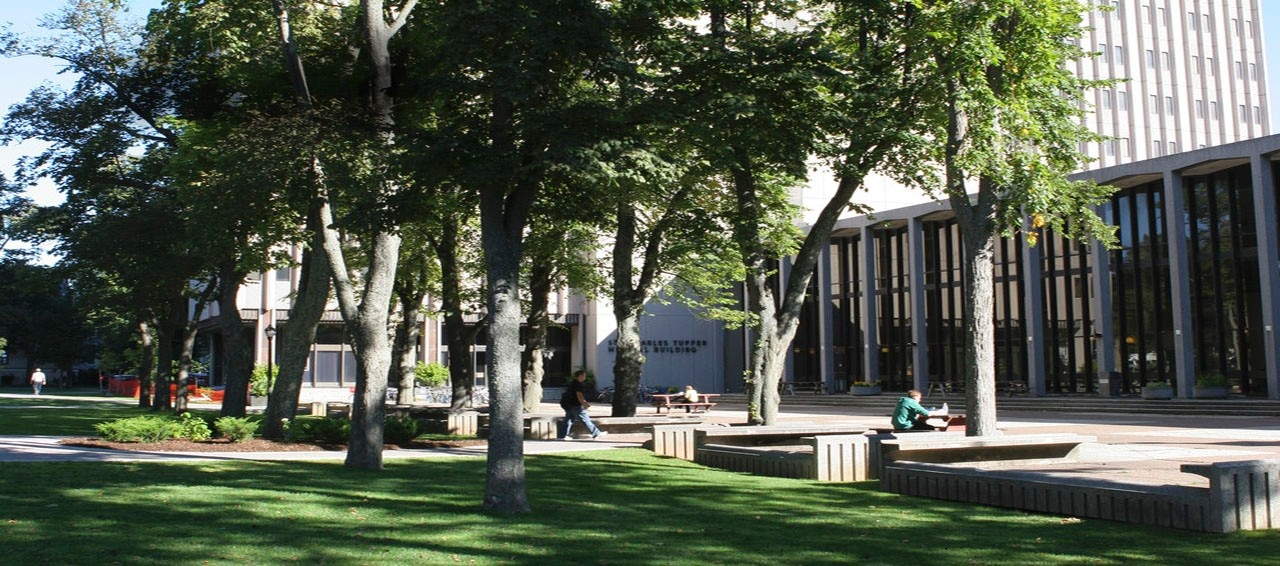
Celebrating our graduates
» Go to news mainClass of 2026 earns MD May 29

The road to graduation is marked by long days, determination, and moments of growth that shape both skill and purpose. It is a milestone worth celebrating.
On May 29, the Class of 2026 moved from the classroom and clinical training into the next phase of their careers. With a strong foundation of knowledge, experience, and compassion, they step forward into residency and a lifetime of caring for patients and communities.
Convocation is a moment to pause and reflect on how far they have come, and to recognize the commitment, perseverance, and sense of responsibility that define this graduating class. Each graduate brings a unique story, shaped by challenge, curiosity, and a shared dedication to medicine.
Here are just a few of the graduates who make us proud.
Beyond the classroom: How a teacher’s mindset continues to shape Dr. Adrian Chan’s journey in medicine
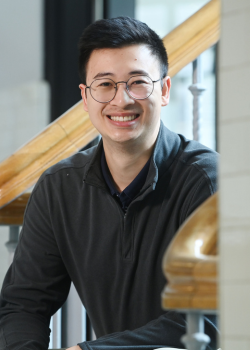 Dr. Adrian Chan, who was born in Hong Kong and grew up in Markham, Ontario from the age of two, never expected to end up on the East Coast of Canada. Nor did he expect he’d move there to enter medical school.
But an opportunity serving as a first responder with the Canadian Coast Guard in Mahone Bay, N.S., quickly changed that.
“I immediately felt something about the Maritimes, a particular warmth and character,” he recalls. “And for the first time, I pictured myself moving out east.”
And move east, he did.
Dr. Chan graduates as part of Dalhousie Medical School’s Class of 2026 and will stay in the city and province he now calls home to complete his residency at Dalhousie University in Diagnostic Radiology.
The winding road to medicine
The path to medicine, however, wasn’t linear.
Dr. Chan completed a concurrent education program at Queen’s University where he earned both Bachelor of Arts (Honors) and a Bachelor of Education, specializing in geography and English. He spent a year in the classroom as a high‑school English teacher, where he thrived on helping his students learn, grow and be seen, before ever considering medicine as a career.
During his studies, he volunteered with St. John Ambulance, providing first‑aid care at community events and later serving in a leadership role as a logistics officer. The work introduced him to the quiet rewards of community‑centred, first‑responder care, and ultimately led him to the Inshore Rescue Boat student program with the Canadian Coast Guard that first brought him to Nova Scotia.
Those volunteer experiences sparked an interest in a range of healthcare pathways, including paramedicine and nursing. Having studied arts, rather than sciences, he assumed medicine was not an option, but a conversation with his cousin, a physician in Halifax, changed that, and he came to see that medicine offered what he’d been looking for in a career: the opportunity to serve his community in a meaningful and direct way, and the chance to keep teaching.
“Watching students grow, supporting families, and nurturing curiosity—those things would remain in my transition from being a classroom teacher to a physician, just in a different form,” he says. “It was that realization that ultimately made me decide to apply to medical school.”
Lessons carried forward
That foundation would continue to shape how Dr. Chan understood medicine once he entered training. His studies in geography and education, he says, gave him an early framework for thinking about the relationships between people, place, and environment—concepts that would later align closely with ideas like the social determinants of health. What didn’t feel medical at the time now feels essential: paying attention to context, resisting assumptions, and recognizing that every patient arrives with a story shaped by forces beyond the exam room.
He traces that mindset back to his time training as a teacher, when he completed a three‑week placement at the American Museum of Natural History in New York City. On one Saturday in particular, Dr. Chan helped run a free program that welcomed children and families from lower‑income communities, offering breakfast and full access to the museum’s exhibits. Later that same day, in the same building, he supported programming for children of wealthy donors attending a gala. The contrast was striking and enduring, reinforcing something that he now carries into every patient interaction: you don’t know what someone is carrying with them when they walk through the door.
“As a teacher, I reminded myself not to make assumptions about my students' lives outside the classroom, and as a physician, I want to hold onto that same principle,” he says. “I want to be attentive and work alongside my interdisciplinary colleagues to provide care that accounts for the whole person.”
The power of mentorship
In medical school, Dr. Chan began to see those values mirrored in the mentors who guided his training, and in the kind of physician‑teacher he hopes to become. He was fortunate to work with faculty who took the time to explain not just what to do, but why—investing in him as a learner rather than simply a trainee.
One mentor in particular, a surgeon Dr. Chan worked with during his clinical rotations, stood out for the trust she placed in him, gradually increasing his responsibilities while remaining closely attentive. Though she encouraged him to consider surgery, she was fully supportive when he shared his decision to pursue diagnostic radiology. That balance of high expectations and respect for a trainee’s goals left a lasting impression, and reflects the kind of physician‑mentor Dr. Chan hopes to become.
With education central to Dr. Chan’s identity, he hopes to contribute to a culture of teaching, whether that's working alongside medical students on rotation, or simply modelling the kind of curiosity and openness that he has valued in his own mentors.
“One day, as an attending,” he says, “I hope to be the kind of physician that a future trainee remembers and recognizes, the way I recognize my mentors now.”
As he looks back on his journey to graduation, Dr. Chan says the most meaningful realization has been understanding just how much his experiences before medicine have shaped the physician he is becoming.
“Those years weren’t detours,” he says. “They were foundational to who I am today.”
To students considering medicine from non‑traditional backgrounds, his message is clear.
“Everything you’ve lived and learned before has made you uniquely yourself, and that uniqueness is a strength,” he says. “Those experiences will surface in ways you don't expect, through how you communicate with patients, in how you notice what others might miss, in the perspective you bring to difficult conversations. Don't minimize that. It matters.”
From rural roots to rural care: Small town N.B. shapes Dr. Jade Rorke’s path
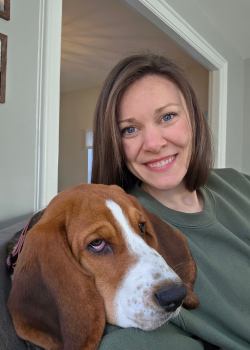 Dr. Jade Rorke’s path to medicine has always been guided by a clear sense of purpose and a desire to make a meaningful impact.
From early on, she was drawn to work that would challenge her, keep her engaged, and allow her to show up for others when it mattered most. That commitment—to people, to communities, and to equitable access to care—has remained constant throughout her journey.
Raised in Mundleville, a small rural community in New Brunswick, Dr. Rorke grew up with a deep understanding of both the vulnerabilities and the strengths of life far from major medical centres.
“I grew up in an impossibly small town and have seen firsthand what a lack of access and resources can lead to,” she says. “But I also saw what dedicated, engaged rural practitioners can do. I strongly believe that all people should have equitable access to care regardless of where they set their roots.”
Exploring with intention
Entering medical school at Dalhousie Medicine New Brunswick, she never lost sight of her rural roots. She didn’t arrive with her specialty choice predetermined, choosing instead to explore the full range of possibilities, reflecting carefully on the kind of work that would challenge her, keep her engaged, and allow her to serve patients meaningfully over time.
“When I started my medical degree, I was floored by the number of different electives, residency options, hospitals, and different career paths presented to me,” she says. “I sat down and made an embarrassingly long list of the skills I wanted to learn, and these translated into numerous electives in family medicine, because that is where I was able to learn in such abundance.”
She found that in family medicine, every day there was a different patient, with a different story who had unique needs and concerns. She completed electives with family physicians practicing low‑risk obstetrics and gynaecology, emergency medicine, and hospitalist rotations, allowing her to experience the full breadth of the specialty. The variety kept her interested and eager to return each day, and the feeling of family, support, and community further drew her to the discipline.
Alongside family medicine, Dr. Rorke was also interested emergency medical care, where versatility, teamwork, and decisiveness are essential.
“There was something about never knowing what was going to come through the doors that really attracted me,” she says. “I enjoyed the fast‑paced environment and the high‑acuity cases, but it was also the camaraderie and the support among staff that made me feel at home.”
She credits emergency physicians and teams who were deeply invested in teaching, who took the time to explain not just what they were doing, but why.
Community care
Beyond Dr. Rorke’s personal experiences, her interest in rural practice was further shaped by mentors she encountered during medical school. Among them was Dr. Kendra Gillmore, whose work left a lasting impression.
“Her dedication to patients, her love of teaching, and her fierce advocacy for those around her were incredible to witness,” she says. “She and her colleagues have created an amazing space for their patients that I would never have expected to see in a rural community.”
Seeing the work Dr. Gillmore put into her practice affirmed for Dr. Rorke that rural medicine provided an opportunity to build something meaningful and responsive within a community.
Quality care, at home
This summer, Dr. Rorke will begin her residency in integrated family medicine and emergency medicine at Dalhousie’s Sussex/Saint John site, training in rural medicine in the very communities she hopes to serve long-term.
Her goal, without question, is to live and work in New Brunswick.
“It’s home, through and through,” she says simply.
After years of thoughtful exploration, she is entering the next chapter of her training equipped with broad skills, a clear sense of purpose, and a deep belief that where someone lives should never determine the quality of care they receive.
A road worth taking: Dr. Korede Akindoju on persistence, purpose, and following your dreams
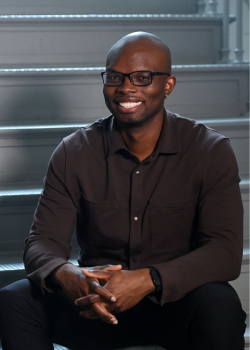 At 15-years-old Dr. Korede Akindoju was volunteering at IWK Health, quietly observing patients come in sick and leave healthier.
He didn’t know it then, but those early moments, combined with years of persistence and self-belief, would eventually lead him back to the hospital, first as a physiotherapist, and later as a medical student.
Born in Nigeria and raised in Halifax from the age of eight, Dr. Akindoju was encouraged when he was young to pursue a career in medicine, law, or engineering. Though neither of his parents worked in healthcare, his mother had aspired for a career in medicine but simply did not have the opportunity—something she ensured was different for her son.
She helped secure the volunteer position at the IWK, and while most kids his age were at summer camp, he was stationed at the information desk and spending time in the emergency department. He didn’t work directly with physicians, but the environment left an impression.
“It was so nice to see patients that were unwell improving,” he recalls. “It was what first sparked my interest in medicine.”
Later, as he moved into his undergraduate studies at Dalhousie, that initial exposure impacted his choices, with medicine remaining a consideration. After trying his hand at the MCAT, ultimately, he chose to complete a degree in kinesiology and went on to train as a physiotherapist. Working closely with patients, helping them regain mobility and return to their lives, felt meaningful and for a time, it seemed like a natural fit.
A moment in his first month of physio training, however, would leave a lasting impact, one that would change his trajectory.
“We were observing hip replacement surgeries in the OR, and it was such a pivotal moment for me,” he recalls. “I had never been in an operating room before and I remember thinking, ‘what is this magic happening in this room.’ Seeing someone’s life change so quickly was incredible.”
Enthused by Dr. Akindoju’s energy, the physicians in the OR encouraged him to consider medicine as a career, and from that moment on, he couldn’t shake the idea.
Still, deciding to pursue medicine and actually getting there were two very different things. Dr. Akindoju spent six years working as a physiotherapist, weighing the decision carefully. Returning to school after time away was daunting, and the process was far from easy—particularly preparing for the MCAT and re-entering academic life after years in practice. But he persisted, and now, four years later, knows he made the right choice.
“I felt like medicine had always been there,” he says. “I’m someone who wants to help people and I think just seeing how an operation can really change somebody's life inspired me to go into medicine.”
A community of support
The transition to medical school was challenging, marked by a steep learning curve and moments of self-doubt. But Dr. Akindoju persisted.
“The volume and complexity of the material were overwhelming, and balancing school with other life responsibilities was difficult,” he says. “It was a huge adjustment, but over time, I learned how I worked best, settled in, and things gradually improved.”
Support and mentorship played a critical role during his studies. During his undergraduate training, Dr. Akindoju was involved with Promoting Leadership in Health for African Nova Scotians (PLANS) program, serving as a counsellor with the inaugural camp. Designed to support Black learners interested in careers in health, PLANS connected him with mentors who reinforced that his goals were achievable. Former staff member and PLANS program manager Michelle Patrick consistently encouraged Dr. Akindoju throughout his journey—support he, in turn, was able to offer other students through his role as a counsellor and mentor. Those relationships proved especially meaningful during moments of uncertainty and further cemented his commitment to mentorship along the way.
As a medical student, Dr. Akindoju was deeply engaged in the community, drawing on his background as a physiotherapist and his work with organizations such as the Black Wellness Cooperative and the Nova Scotia Brotherhood. Through these initiatives, he helped promote equitable access to health and wellness, mentorship, and preventative care, work that aligned closely with his values and reinforced his sense of purpose in medicine.
“Being a visible minority has made me more aware of how representation, access, and systemic barriers affect health outcomes,” says Dr. Akindoju. “That awareness motivates me to advocate for more equitable care.”
Staying the course
As Dr. Akindoju prepares to begin his residency in orthopaedic surgery at Dalhousie, the milestone feels both surreal and deeply earned. Orthopaedics, he says, brings together many of the elements that first drew him to healthcare: problem-solving, teamwork, and the ability to make a tangible difference in someone’s quality of life.
“Having a dream or a goal and actually having the opportunity to pursue it—not a lot of people get that chance,” he says. “I'm super grateful that I have the opportunity to do that.”
From his earliest days in the OR, to medical school graduation at the Rebecca Cohn Auditorium, Dr. Akindoju is proof that it the path forward is rarely straight, and even when the road is long, it’s worth seeing through.
“I can’t remember how many times I told myself, ‘Don’t quit’,” he remarks. “And that’s my biggest message to anyone—if you have a dream you want to pursue, believe in yourself and just don't quit.”
From cows to communities: How early lessons in rural care shaped Dr. Marika Schenkels’ path to family medicine
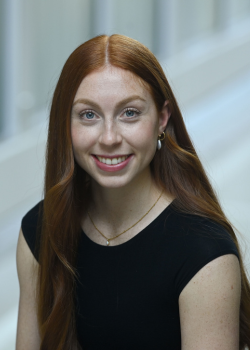 As Dr. Marika Schenkels graduates from medical school and prepares to begin her residency, she does so with a clear sense of purpose: to practice comprehensive, relationship-centred care in rural communities.
That commitment has been years in the making. Growing up, she spent her early days assisting her father, a large-animal veterinarian, on farm calls and C-sections—experiences that quietly shaped her understanding of care, responsibility, and community.
She was drawn to rural family medicine for its breadth, adaptability, and emphasis on long‑term relationships, all qualities she sees as essential to providing meaningful care in smaller communities. In rural settings, she notes, physicians are often trusted with a wide range of clinical needs and called to support patients across all stages of life, making the work both challenging and deeply rooted in community connection.
“There are few better chances to offer this kind of comprehensive, whole-person care than in rural family medicine.”
That belief guided her throughout medical school, shaping both her clinical training and her leadership beyond the classroom. Dr. Schenkels sought out rural learning experiences wherever possible, organizing her fourth‑year electives entirely in rural settings. Along the way, she became a strong advocate for family medicine, working to challenge misconceptions about the specialty and highlight its complexity, flexibility, and critical role in sustaining rural healthcare systems.
“I wish more learners knew how flexible the specialty is and how you can truly build the type of practice you want,” she says. “There is so much choice in how and where to practice, and room to change that throughout one’s career, which is something offered by few other medical specialities.”
A deep connection
As the first point of contact, family physicians must navigate undifferentiated patients, balance wide‑ranging clinical responsibilities, and coordinate care through critical results, prevention, and follow‑up, all while building relationships that span lifetimes. It is work that demands both broad medical expertise and deep human connection, qualities Dr. Schenkels believes define the specialty at its best.
"Family physicians manage all these roles, while walking alongside their patients through their lives,” she says, “laughing and crying together through births, marriages, losses and each and every new life chapter.”
Showcasing the wide scope of practice and diversity of settings within family medicine became central to Dr. Schenkels’ advocacy work with the Dalhousie Family Medicine Interest Group (FMIG), where she was heavily involved throughout medical school. The group works to expose students early to the realities of family medicine through panels featuring different practice models, trips to rural communities across Nova Scotia, and resident‑led skills nights. By creating space for honest conversations about both the rewards and challenges of the specialty, FMIG encourages learners to form their own understanding of family medicine, beyond outdated narratives of overwhelming workloads and limited scope.
That advocacy is also rooted in a willingness to challenge how family medicine is talked about within medical training. Dr. Schenkels is keenly aware of the subtle, cumulative messages learners absorb when choosing their paths, particularly when interest in family medicine is framed as a lesser option to other specialty programs.
“I think it is essential that we recognize the equal parts boldness and humility required as a medical student to confidently proclaim one’s interest in family medicine,” she says. “As a community of medicine, we need to think more carefully about the language we use towards learners as they attempt to choose their paths.”
Rural practice and giving back
This summer, Dr. Schenkels will begin a rural family medicine residency at the Strathcona site in British Columbia, based between the communities of Campbell River and Courtenay–Comox. For her, the choice reflects both a clinical and ethical commitment to rural practice, where family physicians confront systemic challenges related to access, health literacy, and social determinants of health every day.
“While advocacy is often seen as large-scale work, I’ve come to see how powerful small, patient-centred actions can be — from supporting lifestyle changes to helping navigate chronic care and medications,” she says. “I hope that through comprehensive, patient-centred and longitudinal family medicine I can soon give back to the communities like those that given so much to me.”
Looking beyond residency, Dr. Schenkels plans to return to Nova Scotia, with a long‑term goal of practicing rural family medicine, learning from and with her future patient roster. She hopes to serve not only as a physician, but as a mentor and preceptor for future medical students, continuing her advocacy for rural family medicine within educational and policy spaces.
“The skill set of a family doctor is so vast,” she says. “I hope that as I mentor medical students in the future, it is in a way that impresses upon them authentically the beauty and skill required to be a family physician, while allowing them to explore the specialty of their own accord.”
As Dr. Schenkels makes the transition to residency, she recognizes the honour and privilege it is to occupy the position of a rural family physician in the lives of her patients. It is a kind of medicine she has understood since childhood, grounded in trust, adaptability, and long‑term commitment.
Recent News
- How Dalhousie researchers are uncovering the hidden links between metabolism, obesity, and heart disease
- How Dr. Christopher McMaster is helping bridge the gap between scientific discovery and patient care
- Canadian study published in NEJM could change care after joint replacement surgery
- Why some children develop persistent Lyme arthritis and how to improve care
- Understanding how nutrition can support cardiovascular health as we age
- Dr. Jennifer Johnston is reimagining reproductive health
- Fostering the next generation
- How two Dalhousie alum are helping transform cardiac rhythm care around the world