Building comfort and curiosity
» Go to news mainTeddy Bear Clinics help take the fear out of healthcare

Going to the doctor can be nerve-racking, especially for children.
But learning about healthcare procedures with your teddy bear can help transform those healthcare experiences into positive ones.
Developed by Dalhousie medical students Miriam John and Sherry Eskander, Teddy Bear Clinics are an evidence-based initiative aimed at reducing children’s medical anxiety through imaginative play. At these clinics, stuffed animals are treated as patients, moving through simulated medical stations.
Since their inception, the team, currently led by Miriam and fellow medical students Naomi MacMillan, and Olivia Mason, with more than 30 medical student volunteers, have hosted clinics for over 300 children.
"The clinics have been a huge success," says Miriam. "They really seem to ease fear and spark curiosity around medical subjects and equipment."
Over the summer, clinics were hosted for summer campers from the Boys and Girls Clubs Greater Halifax sites in North and East Dartmouth, Spryfield and Sackville.
Learning about healthcare through play
Children explored six hands-on, play-based stations that introduced them to checkups, vaccinations, IVs, casting, X-rays, and the operating room. Each station paired child-friendly simulations, such as Teddy Bear “X-rays,” with real medical equipment, giving children the chance to use tools like stethoscopes and reflex hammers while learning about healthcare in an engaging way.
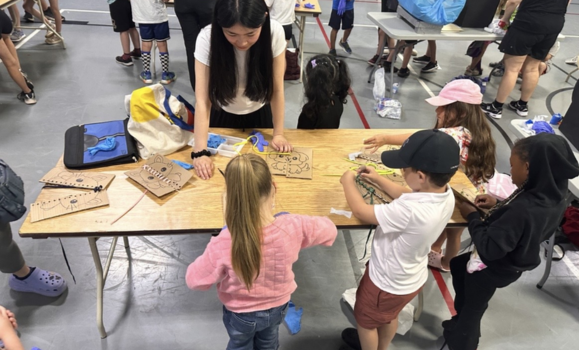
The mix of play and hands-on learning helped familiarize children with healthcare equipment in a fun, low-pressure environment, teaching them what different tools are used for and helping to reduce anxiety about medical settings.
“The vaccination station was especially popular,” says Miriam. “Children learned some of the basics about vaccines before getting the chance to give their teddies, and even each other, ‘vaccines’ using needle-free syringes and vials of water.”
Building skills and connections
Beyond helping children feel more comfortable in healthcare settings, the clinics provide opportunities for medical learners to engage in community outreach, health promotion, and patient education. They also offer valuable experience communicating with young patients and building connections with the communities they serve.
“Providing children with clear, age-appropriate medical education can help build trust in healthcare from a young age,” said Miriam. “Those early positive experiences can shape how children view healthcare interactions and medical interventions later in life.”
Clinics have been hosted in a variety of settings including elementary schools, shelters, the Ronald McDonald House, and with various community partners, allowing students to interact with children from diverse backgrounds and lived experiences. These interactions challenge learners to adapt their communication style, language, and level of detail to meet each child's individual needs, strengthening their ability to communicate effectively and compassionately with pediatric patients.
The success of the Teddy Bear Clinics depends on the dedication of student volunteers who help bring each event to life.
“We are incredibly grateful to all of the student volunteers who make the Teddy Bear Clinics such a special experience,” says Miriam. “We especially want to recognize Keeley Barnable, who created our Teddy Bear MRI machine and helped make the experience even more engaging for children.”
Details included in this story were originally published on the Doctors Nova Scotia Blog.
Recent News
- Teddy Bear Clinics help take the fear out of healthcare
- As he assumes leadership of Dalhousie’s Faculty of Medicine, Dr. Razack discusses his vision for the future, his leadership philosophy, and the Faculty’s role in improving health across the Maritimes.
- Canadian study published in NEJM could change care after joint replacement surgery
- Research exchange builds new pathways for collaboration
- Dalhousie medical student recognized among Canada's future health leaders
- New Dal Med initiative empowers youth with life‑saving skills
- Realistic simulations prepare learners for complex care
- Shaping the systems that train Canada’s physicians