Research that sees the whole person
» Go to news mainDr. Ruth Ann Marrie on Gillian’s Hope

At Dalhousie, Multiple Sclerosis (MS) research begins with a simple question: What does it take for someone with MS to live the best life possible?
That question, and the research it inspires, is driven by Gillian’s Hope Fund for Multiple Sclerosis Research, a legacy born of friendship and philanthropy, and carried forward today by Dr. Ruth Ann Marrie (MD'96), Dalhousie’s first Gillian’s Hope Multiple Sclerosis Clinical Research Chair.
When Dr. Marrie returned to Nova Scotia from her time at the University of Manitoba to take up her new role, it felt both deeply personal and immensely purposeful.
“To come back to Nova Scotia, where I trained, to help shape and advance MS research here. It’s an honour,” she says. “But it’s also a responsibility.”
That sense of responsibility to people living with Multiple Sclerosis, to fellow and future clinicians and researchers, and to the donors who make discovery possible, sits at the heart of Dr. Marrie’s work.
As a professor in the Departments of Medicine and Community Health and Epidemiology and Gillian’s Hope Multiple Sclerosis Clinical Research Chair, she is helping Dalhousie build on a strong legacy of MS research while charting a more inclusive, holistic path forward.
Building on a strong foundation
Dalhousie has long been recognized for its leadership in MS care and research. Dr. Marrie credits that history to visionaries who understood early on that clinical care and research must move together.
“That foundation is already here,” she says. “What excites me is building on it—bringing together people with different kinds of expertise and helping them contribute in ways they might not otherwise have time to do.”
With a heavy clinical load, many physicians are eager to participate in research but lack the capacity to lead projects themselves. Dr. Marrie’s role creates space for collaboration, linking clinicians, trainees, and researchers from disciplines such as nutrition, rehabilitation, neuropharmacology, and epidemiology.
She is already supervising medical students on MS research projects and hopes that exposure will inspire the next generation of clinician‑scientists. “If we can spark that interest early,” she says, “that’s how you build capacity for the future.”
Looking beyond the disease
What sets Dr. Marrie’s research apart is its insistence on seeing the whole person, not just the disease.
“MS doesn’t unfold in isolation,” she explains. “For a long time, we tried to predict outcomes based only on MS‑specific features, like the number or location of relapses early on, but that didn’t tell us much about how someone would be doing 10, 20, or even 50 years later.”
Her work began by examining comorbid conditions, such as depression or diabetes, and their impact on MS outcomes. The results were striking: co‑existing health conditions significantly influence relapse rates, disability progression, quality of life, and even lifespan.
But that was only the beginning.
“What if we step back and look at everything that makes someone who they are?” Dr. Marrie asks. “Their social identity, their resources, their environment, their early life experiences alongside biological factors like age, sex, and genetics.”
This broader lens opens the door to more personalized, equitable care. It also challenges traditional models of treatment that focus solely on medications.
When social needs shape health
One of the most powerful insights from Dr. Marrie’s work is the role social factors play in health outcomes.
“If someone doesn’t have secure housing or enough food to eat, they’re not in a position to follow recommendations about diet, exercise, or fatigue management,” she says. “They may not be able to afford medications. So, the most effective intervention might not be medical at all, it might be addressing those foundational needs first.”
Her current national research project, supported by a major CIHR health equity team grant, is designed to do just that. The study focuses on people who have historically been underrepresented in MS research, including men, people from racialized communities, recent immigrants, those living in rural areas, 2SLGBTQI+ individuals, and people with more severe disability.
By using fully remote data collection including online consent, telephone interviews, mailed saliva samples, the study reduces barriers to participation. The goal is not only to understand how biological and social factors intersect, but also to test practical social interventions, such as patient navigators or routine screening for social needs in MS clinics.
“If we can show these approaches help,” Dr. Marrie says, “we can make the case to integrate them into routine care.”
The meaning of Gillian’s Hope
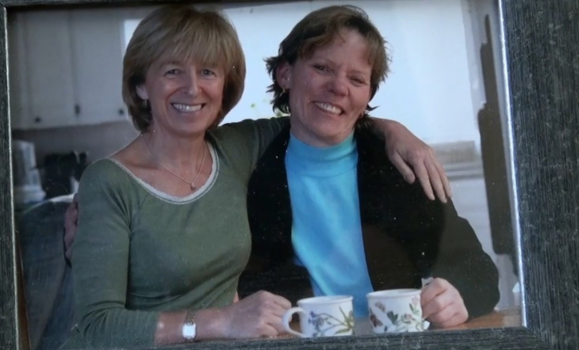
Local philanthropist Margot Spafford first established Gillian's Hope Fund in 2015 in an effort to improve multiple sclerosis care. Over one million dollars was initially raised, and sights are set on growing the fund to $5 million to ensure MS research is supported in perpetuity.
“The Gillian’s Hope fund was created in honour of my dear friend, Gillian Morrow, who lived with multiple sclerosis for over two decades,” says Spafford.
For Marrie, carrying that name is a constant reminder of why the work matters.
“It brings the focus back to people,” she says. “This gift is rooted in friendship and in a desire to make a lasting difference, not just for one person, but for a whole community.”
That personal connection is something Marrie does not take lightly. “It’s special to be part of,” she says.
Why philanthropy matters
Philanthropy, Marrie emphasizes, is not just helpful; it is essential.
“Funding opportunities are increasingly limited,” she explains. “Philanthropy opens doors that would otherwise be closed. It gives researchers time—time to build collaborations, to gather early data, to pursue big and complex ideas.”
The Gillian’s Hope fund allows Marrie to spend more time doing research, enabling her to lead ambitious, interdisciplinary projects that would be difficult to sustain otherwise.
It also sends a powerful message.
“Philanthropy signals that people with MS are seen, that their lives matter, and that progress is possible,” she says. “It’s an investment in caring and belief.”
Recent News
- Teddy Bear Clinics help take the fear out of healthcare
- Dr. Shawna O'Hearn advances menopause workplace support
- As he assumes leadership of Dalhousie’s Faculty of Medicine, Dr. Razack discusses his vision for the future, his leadership philosophy, and the Faculty’s role in improving health across the Maritimes.
- Canadian study published in NEJM could change care after joint replacement surgery
- Research exchange builds new pathways for collaboration
- Dalhousie medical student recognized among Canada's future health leaders
- New Dal Med initiative empowers youth with life‑saving skills
- Realistic simulations prepare learners for complex care