Mental Health Responses in a Changing World
Mental Health Responses in a Changing World 2026:
Innovative Responses to Humanitarian Emergencies
Download the event program [PDF - 955 KB]
Complete the evaluation surveys
The surveys will close on July 31, 2026 at 11:59 p.m.
Event Details
Location: Online (registration required)
Date: Friday, July 10, 2026
Time: 8 a.m. - 4 p.m. (Atlantic Standard Time)
Keynote Speaker:
Professor Pamela Collins
Chair, Department of Mental Health and Director, Center for Global Mental Health, Johns Hopkins Bloomberg School of Public Health
Presentation: HIV, mental health, and humanitarian emergencies: understanding integrated responses
Pricing:
- Early Bird Virtual Price: $50.00 (CAD)
- Virtual Price after May 29: $70.00 (CAD)
Registration:
Registration for this event is now closed.
Cancellation Policy:
Cancellations before the deadline of Friday, June 12, 2026 at 11:59 p.m. (Atlantic time) will be fully refunded less the processing fee of $10.00 (CAD).
Cancellations received after the deadline of Friday, June 12, 2026, at 11:59 p.m. (Atlantic time) will forfeit 100% of the registration charges.
Keynote Speaker
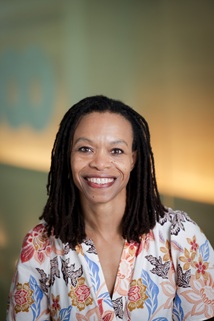
Pamela Collins, MD, MPH
Chair, Department of Mental Health and Director, Center for Global Mental Health at the Johns Hopkins Bloomberg School of Public Health
Pamela Collins, MD, MPH, is a Bloomberg Centennial Professor, chair of the Department of Mental Health and director of the Center for Global Mental Health at the Johns Hopkins Bloomberg School of Public Health. She is a psychiatrist who works at the intersections of global mental health, HIV care, and urban mental health for adolescents and adults. Her current projects integrate psychosocial interventions into routine HIV care for adolescents living with HIV and into community-based care with faith-based providers in sub-Saharan Africa.
During her leadership role at the U.S. National Institute of Mental Health, she spearheaded major research initiatives that strengthened the global evidence base for integrating mental health services into HIV programs, primary care, maternal health, and chronic disease care in low- and middle-income countries and stimulated research to reduce mental health disparities in the US. Prior to her current position, while professor of Psychiatry and Global Health at the University of Washington, she oversaw the implementation of HIV and mental health integration activities in Ukraine, sub-Saharan Africa, India, and the Caribbean as executive director of I-TECH.
Dr. Collins is a scientific advisor to PEPFAR, the U.S. President's Emergency Plan for AIDS Relief program, has served as a commissioner for the second Lancet Commission on adolescent health and wellbeing and the Lancet Commission on global mental health and sustainable development, and on the National Advisory Mental Health Council. Dr. Collins is a co-director of the Johns Hopkins-Emory University Center for HIV and Mental Health Stigma Elimination Strategies (CHIMES). She is a member of the National Academy of Medicine.
Collins completed her residency in Psychiatry at Columbia University/New York State Psychiatric Institute. She earned her MD from Weill Cornell Medical College, an MPH from Columbia University Mailman School of Public Health, and a BA from Purdue University. She was a postdoctoral fellow in the Harvard Medical School Department of Social Medicine and the Columbia University Department of Psychiatry, where she subsequently joined the faculty.
Panelists
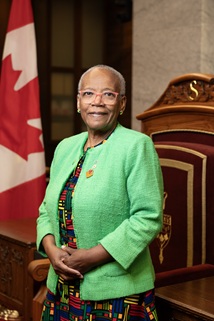
The Honourable Wanda Thomas Bernard, PhD, C.M., O.N.S. In November 2016, Senator Wanda Thomas Bernard became the first African Nova Scotian woman to be appointed to the Senate of Canada. She proudly holds her position in the Red Chamber representing the province of Nova Scotia, championing issues impacting African Canadians nationally in her work. Senator Bernard is a proud resident of East Preston, where she lives with her daughter Candace, son-in-law David and grandsons Damon and Gavin. Throughout her social work career, Senator Bernard has maintained a deep dedication to social justice and racial justice. Based on this work and perseverance she was awarded the Order of Canada in 2005, and the Order of Nova Scotia in 2014. After practicing frontline social work in Nova Scotia and founding the Association of Black Social Workers in 1979, Senator Bernard became a professor at the Dalhousie School of Social Work in 1990 where she subsequently held the position of Director for 10 years. During her time at Dalhousie, Senator Bernard developed a curriculum for the ‘Africentric Social Work’ course. In 2016, she was appointed Special Advisor on Diversity and Inclusiveness at Dalhousie University and is the first African Nova Scotian to hold a tenure track position. In 2017, Senator Bernard was the first African Canadian to be appointed Professor Emeritus in the School of Social Work (SSW) at Dalhousie University; the first woman within the SSW to achieve this appointment. In recognition of her work to advance diversity and inclusion through leadership, activism, research and community efforts, Senator Bernard was awarded the Frank McKenna Award for Leadership in Public Policy in 2021. Senator Bernard has continued to enact social justice and fight for racial justice in the Senate. She is proud to be a member of the Progressive Senate Group, and a founding member of the African Canadian Senate Group. |

Dr. Ejemai Eboreime is an award-winning researcher and implementation scientist whose work sits at the intersection of climate change, conflict, and mental health in vulnerable populations. With over 15 years of frontline global health experience and a PhD in implementation science — among the first awarded in this field in Africa — he brings a rare ability to bridge the divide between evidence and practice across diverse health systems. Dr. Eboreime is an Assistant Professor in the Department of Psychiatry at Dalhousie University, where he serves as Program Director for the Masters in Clinical Psychiatry and Global Mental Health. His research is anchored in health equity and spans two continents. He leads the EMBRACE research program, which examines and addresses barriers to mental healthcare access among African Nova Scotian communities and newcomers in Canada, while his RESETTLE-IDPs program tests innovative mental health interventions for internally displaced persons in Nigeria. Central to both lines of inquiry is his focus on how climate disasters — from Nova Scotia's wildfires to drought across the Sahel — disproportionately affect the mental health of marginalized communities. Dr. Eboreime has broad expertise in digital mental health, having contributed to the evaluation of low-cost, scalable interventions designed to expand mental health access where traditional services remain limited or absent. His research portfolio, supported by over C$15 million in funding from organizations including CIHR, Grand Challenges Canada, Research Nova Scotia and the Bill & Melinda Gates Foundation, reflects his commitment to developing and testing accessible solutions for underserved populations. Having served as a physician, Senior Medical Officer with Nigeria's National Primary Health Care Development Agency, and now as an academic researcher in Canada, Dr. Eboreime offers a distinctive North–South perspective on health systems strengthening — one that is essential to advancing the global mental health agenda. |

Kendall Paul (They/Them/Nekm) is a Two-Spirit, non-binary Mi’kmaw person who is a proud member of Membertou First Nation in Una’maki (Cape Breton). They currently work as one of the Mental Health Counsellors with the Indigenous Mental Health & Wellness Team, or Wije’winen Mawi-apoqnmatultinej (Come with us, we’ll help each other, together) at the Mi’kmaw Native Friendship Centre in Kjipuktuk (Halifax). Prior to being in this position, Kendall held the role of Housing Intensive Case Manager, working with high-acuity urban Indigenous people who were actively unhoused or facing housing insecurity. Kendall draws on both their lived experience as an Indigenous person, a Two-Spirit, non-binary person, a bisexual person, a person living with a disability, a social worker, and an intergenerational survivor of colonial violence, as well as their formal education to guide and inform their practice to be inclusive, culturally safe and trauma-informed. |
Accreditation
Educationally approved by Dalhousie University Continuing Professional Development and Medical Education.

This activity is an Accredited Group Learning Activity (Section 1) as defined by the Maintenance of Certification Program of the Royal College of Physicians and Surgeons of Canada, and approved by Dalhousie University Continuing Professional Development and Medical Education. You may claim a maximum of 5.0 hours (credits are automatically calculated).
About:
Inspired by the World Health Organization’s 2025 World Mental Health Day theme, our conference responds to the urgent global need for effective, evidence-informed, and community-based mental health and psychosocial supports in humanitarian emergencies. The WHO has emphasized the importance of interventions that address immediate mental health needs, foster long-term recovery, and empower individuals and communities to rebuild and thrive.
This inaugural conference will bring together practitioners, researchers, policy makers, students, and community members to enhance communication across the practice, policy, and research sectors. Through keynote presentations, panel discussions, posters, and interactive breakouts, participants will explore innovative mental health responses and technological supports that strengthen community resilience across changing global contexts.
Who is this conference for?
- Professionals
- Practitioners and Researchers in the field of mental health (including but not limited to psychiatry, psychology, social work, computer science, environmental studies, and international development studies)
- Policy makers across diverse sectors
- Service providers and community-based organizations working in and around the field of supporting people living with mental health challenges and/or mental illness.
- Students interested in individual, relational and contextual factors related to mental health and/or mental illness.
- Community members with lived experience, those impacted by community members living with mental health challenges, and advocates.
Call for Abstracts and Posters
The conference will feature poster presentations and interactive sessions to spark dialogue, build connections, and support knowledge mobilization. Details on how you can participate can be found in our Call for Abstracts and Posters.
Abstract submission is now closed.
Questions?
Email cgmh@dal.ca